Organizational Structure of the Association
The Association shall comprise of the following: -
(i) Chairman
(ii) Senior Vice Chairman
(iii) Vice Chairman (one vice chairman for each regional office)
(iv) Executive Committee
(v) Regional Committees (for each regional office)
(vi) General Body
History Of Sugar
Sugar is a natural ingredient that has always been in our diet. It is also one of the world’s oldest documented commodities.
It is widely believed that cane sugar was first used by man in Polynesia from where it spread to India. In 510 BC the Emperor Darius of Persia invaded India where he found “the reed which gives honey without bees”. The secret of cane sugar was kept a closely guarded secret whilst the finished product was exported.
When the Arab peoples in the seventh century AD invaded Persia in 642 AD, they found sugar cane being grown and learnt how sugar was made. As their expansion continued, they established sugar production in other lands that they conquered including North Africa and Spain.
Sugar was only discovered by western Europeans as a result of the Crusades in the 11th century AD and the first sugar was recorded in England in 1069. The subsequent centuries saw a major expansion of western European trade with the East, including the importation of sugar. At this time, it was regarded as very much a luxury.
In the 15th century AD, European sugar was refined in Venice, confirmation that even then when quantities were small, it was difficult to transport sugar as a food grade product. In the same century, Columbus sailed to the Americas, and it is recorded that in 1493 he took sugar cane plants to grow in the Caribbean. The climate there was so good for the growth of the cane that an industry was quickly established.
Sugar beet was first identified as a source of sugar in 1747. However, it was kept a secret until the Napoleonic wars at the start of the 19th century when Britain blockaded sugar imports to continental Europe. By 1880 sugar beet had replaced sugar cane as the main source of sugar on continental Europe.
Sugar Year
means the Period of twelve months commencing on the 1st day of October and ending with the 30th day of September.
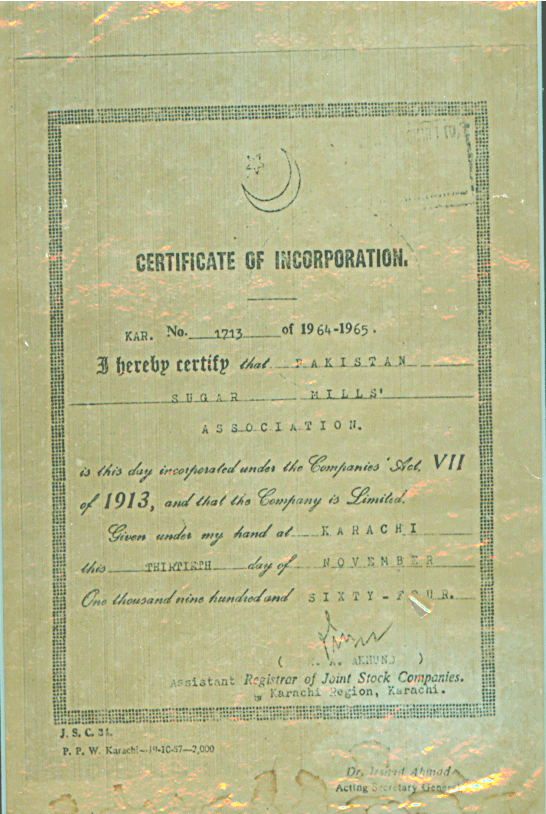
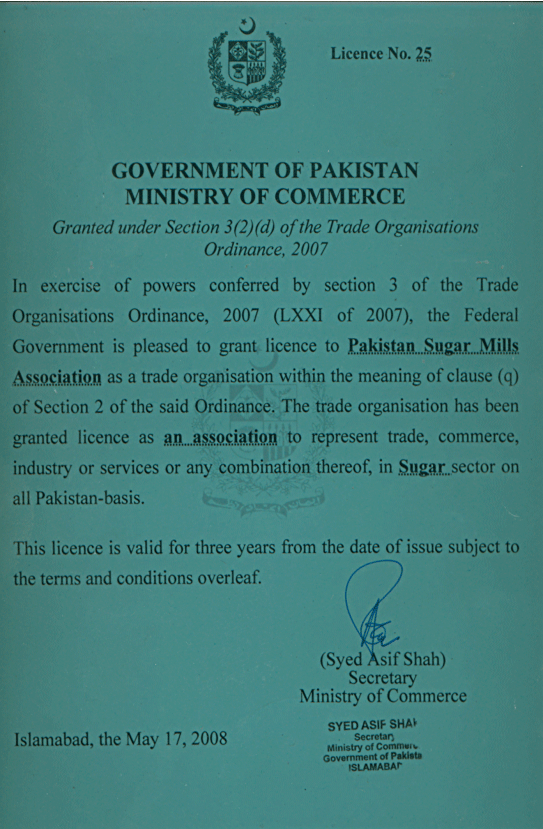
Registration
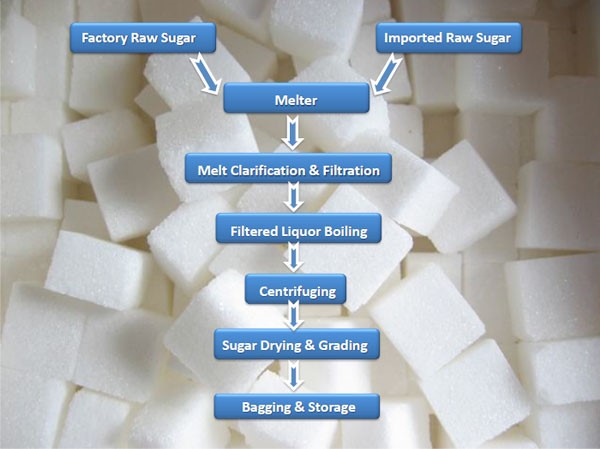
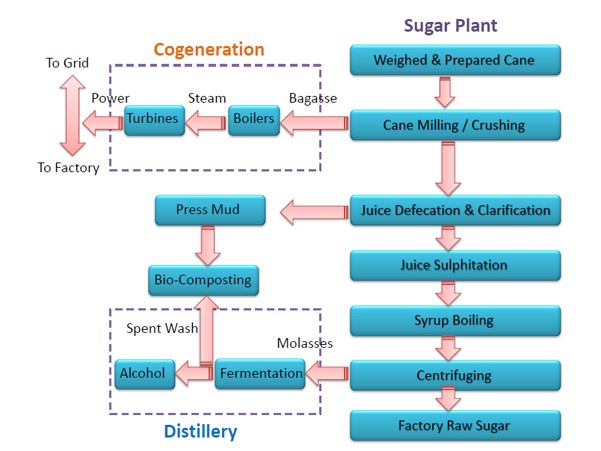
Sugar Process Flow Chain